Graph databases have become increasingly popular for managing interconnected data in applications ranging from social networks to fraud detection systems. As these systems grow in complexity and scale, the need for efficient subgraph query processing has emerged as a critical challenge. Recent advancements in acceleration techniques are reshaping how enterprises extract meaningful patterns from massive graph datasets.
The fundamental challenge lies in the combinatorial explosion of possibilities when searching for subgraph patterns within large graphs. Traditional approaches that rely on exhaustive search or index-based methods often struggle with performance degradation as data volume increases. This has led researchers and engineers to develop innovative optimization strategies that dramatically reduce query response times without compromising accuracy.
Parallel processing architectures have shown particular promise in tackling subgraph isomorphism problems. By distributing the search space across multiple computing units, modern systems can achieve near-linear speedups for many practical query scenarios. This approach becomes especially powerful when combined with intelligent workload balancing algorithms that dynamically adjust to the characteristics of both the query and the underlying data graph.
Another breakthrough comes from learning-based query optimization, where machine learning models predict the most efficient search strategies based on historical query patterns. These systems continuously improve their performance by analyzing past executions and adapting their approaches accordingly. The most sophisticated implementations can even adjust their strategies mid-query when they encounter unexpected data distributions.
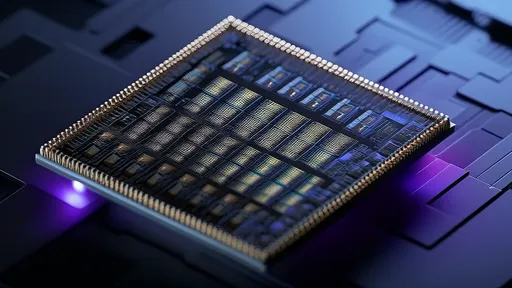
Hardware acceleration has also entered the graph database arena. Specialized graph processing units and FPGA-based solutions are being deployed to handle the specific computational patterns of subgraph matching. These technologies excel at the parallel processing requirements of graph traversal operations, offering order-of-magnitude improvements for certain query types.
The implications of these advancements extend far beyond technical benchmarks. In financial services, faster subgraph queries enable real-time detection of complex fraud patterns. Healthcare researchers can more quickly identify promising molecular structures in drug discovery. Social media platforms gain the ability to instantly surface relevant connections and communities for their users.
Looking ahead, the integration of quantum computing principles with classical graph algorithms presents an exciting frontier. While still in early stages, quantum-inspired algorithms show potential for solving certain subgraph matching problems with fundamentally different complexity characteristics. This could eventually lead to breakthroughs in solving problems currently considered intractable for large-scale graphs.
As organizations continue to recognize the value hidden in their interconnected data, the demand for high-performance subgraph query processing will only intensify. The coming years will likely see these acceleration techniques move from research labs into mainstream database products, making sophisticated graph analytics accessible to a much broader range of applications and users.
What remains constant is the need for solutions that balance speed with accuracy, and theoretical improvements with practical implementation considerations. The most successful approaches will be those that can adapt to diverse real-world graphs while maintaining robust performance across varying query workloads. This ongoing evolution promises to unlock new possibilities in how we extract insights from complex networks of data.

By /Jul 22, 2025

By /Jul 22, 2025
By /Jul 22, 2025

By /Jul 22, 2025
By /Jul 22, 2025

By /Jul 22, 2025
By /Jul 22, 2025
By /Jul 22, 2025
By /Jul 22, 2025

By /Jul 22, 2025
By /Jul 22, 2025

By /Jul 22, 2025
By /Jul 22, 2025
By /Jul 22, 2025
By /Jul 22, 2025
By /Jul 22, 2025
By /Jul 22, 2025
By /Jul 22, 2025
