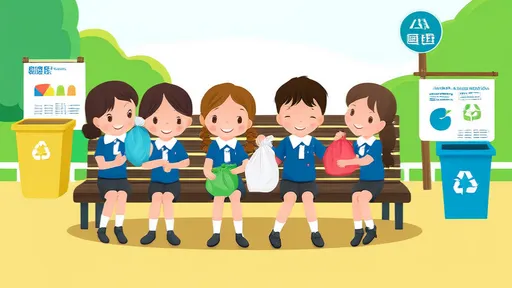
The concept of gamification has been steadily gaining traction across various sectors, and environmental education is no exception. In recent years, cities worldwide have been experimenting with gamified approaches to teach residents about waste sorting and recycling. The results, as emerging studies suggest, are nothing short of fascinating. By transforming mundane tasks into engaging challenges, these programs appear to be rewriting the rules of public participation in sustainability initiatives.
At its core, gamification leverages our innate desire for competition, achievement, and reward. When applied to waste management education, this psychological toolkit becomes particularly potent. Municipalities from Shanghai to San Francisco have reported significant improvements in recycling rates after implementing interactive apps that award points for proper sorting. These digital platforms often feature leaderboards, virtual badges, and even tangible rewards like coupons for local businesses. The data paints a compelling picture: engagement durations triple when compared to traditional brochure-based campaigns.
What makes these programs truly remarkable isn't just their immediate impact but their lasting effects on behavior. Neuroscientific research indicates that game-like elements create stronger neural pathways associated with habitual actions. This explains why participants in gamified waste sorting programs continue practicing proper disposal methods long after the initial novelty wears off. The behavioral shift appears more permanent than that achieved through conventional awareness campaigns, which often see participation rates plummet within months.
The technological backbone of these initiatives deserves particular attention. Modern systems employ machine learning to provide real-time feedback through smartphone cameras. Users simply snap a photo of their waste, and the app instantly categorizes it while explaining the reasoning behind each classification. This instant gratification mechanism—paired with subtle social pressure from visible participation metrics—creates a powerful cocktail of motivation. Early adopters report that what began as a curiosity often evolves into a daily habit, sometimes even sparking friendly neighborhood competitions.
Critics initially questioned whether gamification might oversimplify complex environmental issues. However, the opposite seems true. By breaking down intricate waste management systems into digestible, interactive components, participants develop a more nuanced understanding than through passive learning. The layered design of these programs—starting with basic categories before introducing specialized recycling streams—mirrors effective pedagogical approaches used in classrooms worldwide.
Perhaps most surprisingly, these programs demonstrate particular effectiveness across demographics that traditionally show low engagement with environmental initiatives. Teenagers and young adults, often the hardest demographic to reach with conventional campaigns, emerge as the most active participants in gamified systems. The social media integration common to these platforms plays no small part in this phenomenon, turning responsible waste management into a shareable achievement rather than a chore.
The financial implications haven't gone unnoticed by city planners. While developing these programs requires upfront investment, the long-term savings from reduced contamination in recycling streams and decreased landfill costs present a compelling case. Several municipalities have reported ROI within eighteen months—a timeline that makes even skeptical budget committees take notice. Private waste management firms are following suit, with industry leaders racing to develop proprietary versions of these educational tools.
As climate change accelerates and urban populations grow, the scalability of such interventions becomes increasingly vital. The decentralized nature of app-based learning allows for rapid adaptation across cultural contexts. Pilot programs in developing nations show particular promise, where mobile penetration often outpaces traditional waste infrastructure development. This unexpected synergy between technology and sustainability might just hold one of the keys to addressing our global waste crisis.
Looking ahead, the next generation of these systems will likely incorporate augmented reality features and IoT-connected bins that automatically track and reward proper sorting. Some forward-thinking cities are already experimenting with blockchain-based reward systems that could create entirely new economies around sustainable behavior. While challenges remain—particularly regarding data privacy and equitable access—the trajectory suggests gamification will play an integral role in shaping environmental citizenship for decades to come.
The marriage of play and responsibility, once considered unlikely bedfellows, is proving to be one of the most effective strategies in modern environmental education. As these programs evolve from experimental pilots to mainstream policy tools, they offer a hopeful glimpse into how we might collectively address one of urbanization's most persistent challenges. The垃圾桶 of tomorrow might just come with a high score display.

By /Jul 22, 2025

By /Jul 21, 2025
By /Jul 21, 2025

By /Jul 21, 2025

By /Jul 21, 2025
By /Jul 21, 2025

By /Jul 21, 2025

By /Jul 21, 2025

By /Jul 21, 2025
By /Jul 21, 2025

By /Jul 21, 2025

By /Jul 21, 2025
By /Jul 21, 2025

By /Jul 21, 2025

By /Jul 21, 2025

By /Jul 21, 2025

By /Jul 21, 2025
By /Jul 21, 2025
