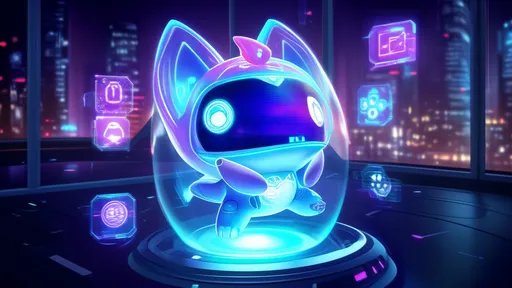
The gaming industry has witnessed a remarkable evolution in recent years, with cross-game collaborations becoming a defining trend. Among the most intriguing developments is the emergence of electronic pet (e-pet) cross-game linkage technology, which allows virtual pets to transcend the boundaries of individual games and interact across multiple platforms. This innovation not only enhances player engagement but also opens up new avenues for immersive gameplay experiences.
The Rise of E-Pet Cross-Game Linkage
Electronic pets have been a beloved feature in gaming since the late 1990s, with titles like Tamagotchi and Digimon captivating audiences worldwide. However, the concept of these virtual companions existing beyond a single game was once a distant dream. Today, advancements in cloud computing, blockchain technology, and standardized APIs have made it possible for e-pets to travel between games, carrying their unique attributes, growth history, and even emotional bonds with players.
This technological breakthrough has been particularly embraced by MMORPGs and mobile gaming platforms. For instance, a player's e-pet raised in a fantasy RPG might appear as a companion in a sci-fi shooter, adapting its appearance and abilities to fit the new environment while retaining its core identity. Such seamless integration requires sophisticated backend systems capable of translating data across different game engines and mechanics.
Technical Foundations of Cross-Platform Pet Integration
The architecture enabling e-pet portability involves multiple layers of innovation. At its core lies a universal pet profile system that stores comprehensive data about each virtual creature - from basic statistics like level and skills to more nuanced elements such as personality traits and relationship history with its owner. This profile exists in a decentralized format, allowing authorized games to access and update specific portions of the data while maintaining overall consistency.
Interoperability protocols form another critical component. These standardized rules govern how different games interpret and implement e-pet characteristics. For example, a "loyalty" attribute might translate to increased accuracy in one game while becoming a damage resistance bonus in another. The protocols ensure meaningful continuity without compromising individual game balance.
Player Benefits and Community Impact
For gamers, the implications of cross-game e-pets are profound. The technology effectively creates persistent digital companions that grow and evolve alongside players across their entire gaming journey. This continuity fosters deeper emotional connections, as players invest time nurturing pets that retain long-term value rather than being confined to a single title.
Communities have formed around these interconnected pet ecosystems, with players trading tips on which game environments best suit particular pet types or how to maximize cross-game synergies. Some developers have even implemented shared pet daycare centers where users from different games can temporarily lodge their e-pets, creating unexpected social interactions between otherwise separate player bases.
Economic Models and Monetization Strategies
The business potential of linked e-pet systems has prompted innovative monetization approaches. While the base technology typically remains free-to-use, developers have introduced premium pet passports that enable enhanced cross-game functionality. These might include special evolution paths only available when transferring between certain titles or exclusive accessories that carry visual effects across all supported games.
Virtual pet marketplaces have also flourished, with rare cross-game compatible pets commanding substantial value. Blockchain integration in some implementations allows for verifiable ownership and authenticity, creating a thriving secondary market. Interestingly, this has led to the emergence of professional e-pet breeders who specialize in raising desirable traits for resale.
Challenges and Future Directions
Despite its promise, the technology faces several hurdles. Standardization remains an ongoing challenge, with competing ecosystems vying to establish dominant protocols. There are also concerns about data privacy and security, particularly when dealing with pets that may have significant real-world monetary value attached to them.
Looking ahead, developers are experimenting with augmented reality integrations that would allow cross-game e-pets to interact with the physical world through smartphone cameras. Another frontier involves artificial intelligence that enables pets to develop truly unique personalities based on cross-game experiences, potentially leading to digital companions with unprecedented levels of individuality.
The evolution of e-pet cross-game linkage represents more than just a technical achievement - it signifies a shift in how we perceive digital ownership and companion relationships in virtual spaces. As the technology matures, it may well redefine the boundaries between separate gaming universes, creating a more interconnected and persistent digital world where our virtual companions can truly accompany us wherever we choose to play.

By /Jul 22, 2025
By /Jul 21, 2025
By /Jul 21, 2025

By /Jul 21, 2025

By /Jul 21, 2025

By /Jul 21, 2025

By /Jul 21, 2025

By /Jul 21, 2025

By /Jul 21, 2025
By /Jul 21, 2025

By /Jul 21, 2025

By /Jul 21, 2025

By /Jul 21, 2025

By /Jul 21, 2025

By /Jul 21, 2025

By /Jul 21, 2025
By /Jul 21, 2025
By /Jul 21, 2025
