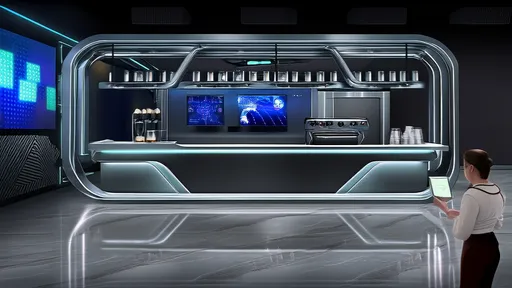
The gaming industry has witnessed a paradigm shift in recent years, with cloud gaming emerging as a disruptive force. Amidst this transformation, a novel concept has taken root—the cloud gaming café. Unlike traditional internet cafés, these establishments leverage cutting-edge streaming technology to deliver high-end gaming experiences without the need for expensive hardware. This innovative business model is redefining social gaming spaces while addressing accessibility challenges in the gaming ecosystem.
At the heart of this revolution lies the elimination of hardware barriers. Traditional gaming cafés required constant upgrades to maintain competitive specs, creating financial strain for operators. Cloud gaming cafés circumvent this issue entirely by running games on remote servers, streaming content directly to modest terminals. Patrons can enjoy graphically intensive titles on basic equipment, from tablets to low-spec PCs, while the café benefits from reduced maintenance costs and scalable infrastructure.
The operational model presents unique advantages for both business owners and consumers. Café operators can offer an extensive library of games without worrying about physical storage or compatibility issues. Game publishers, meanwhile, gain access to new revenue streams through subscription shares or pay-per-play models. For players, this translates to unprecedented access to premium gaming content that might otherwise require thousands of dollars in personal hardware investment.
Social dynamics within these spaces have evolved remarkably. The cloud gaming café serves as a hybrid between an esports arena and a casual hangout spot. Groups can spontaneously organize multiplayer sessions without installation hassles, while solo players benefit from instant access to their cloud-saved progress across different devices. Some establishments have incorporated VR stations powered by cloud rendering, creating immersive experiences that were previously impossible in public venues due to hardware constraints.
Monetization strategies in this model demonstrate particular ingenuity. Beyond hourly rates, pioneering cafés have implemented tiered memberships offering priority server access or exclusive in-game content. Partnerships with game developers yield special events where patrons gain early access to unreleased titles—a mutually beneficial arrangement that drives foot traffic while providing developers with valuable player feedback. Food and beverage sales, traditionally the secondary revenue stream, now integrate with gaming experiences through themed menus and "power-up" drink specials timed with popular gaming sessions.
Technological infrastructure forms the backbone of successful operations. The most prosperous establishments invest in enterprise-grade networking solutions to ensure latency stays below perceptible thresholds. Some forward-thinking cafés have begun deploying edge computing nodes to further reduce lag, creating a competitive advantage in regions where internet infrastructure remains inconsistent. This technical investment pays dividends in customer retention, as gamers increasingly prioritize performance over proximity when choosing their social gaming venue.
The concept shows particular promise in emerging markets where high-end gaming PCs remain prohibitively expensive. In Southeast Asia and Latin America, cloud gaming cafés are democratizing access to AAA titles, creating new gaming demographics overnight. Localized pricing models and prepaid options cater to diverse economic realities, while community tournaments foster grassroots esports development. This globalization effect is reshaping game design itself, as developers now consider cloud café audiences when optimizing for broader accessibility.
Environmental considerations add another layer of appeal to the model. By centralizing processing power in energy-efficient data centers, the collective carbon footprint of gaming decreases significantly compared to individual high-performance rigs. Progressive cafés highlight this sustainability angle in their marketing, attracting eco-conscious consumers. The reduced electronic waste from prolonged hardware lifecycles further strengthens the environmental proposition, creating a rare alignment between commercial success and ecological responsibility in the tech sector.
Looking ahead, industry analysts predict these cafés will evolve into full-fledged gaming hubs offering development workshops and content creation studios. Early experiments with "interactive dining" concepts—where menu items trigger in-game effects—hint at untapped potential at the intersection of gastronomy and gaming. As 5G networks mature and cloud technology advances, the cloud gaming café stands poised to become the dominant paradigm for social gaming worldwide, blending cutting-edge technology with timeless human connection.
By /Jul 22, 2025

By /Jul 21, 2025

By /Jul 21, 2025

By /Jul 21, 2025

By /Jul 21, 2025

By /Jul 21, 2025

By /Jul 21, 2025

By /Jul 21, 2025

By /Jul 21, 2025

By /Jul 21, 2025

By /Jul 21, 2025

By /Jul 21, 2025

By /Jul 21, 2025

By /Jul 21, 2025

By /Jul 21, 2025

By /Jul 21, 2025

By /Jul 21, 2025

By /Jul 21, 2025
