The world of gaming has long been dominated by visual and auditory experiences, leaving players with visual impairments at a significant disadvantage. However, recent advancements in braille tactile display technology are beginning to bridge this gap, opening up new possibilities for inclusive gaming. These innovative devices translate visual and auditory information into tactile feedback, allowing blind and visually impaired individuals to engage with games in ways previously thought impossible.
Braille tactile displays are not entirely new, but their application in gaming is a relatively unexplored frontier. Traditional uses have focused on reading and text-based applications, such as e-books or computer interfaces. The adaptation of this technology for gaming requires a fundamental rethinking of how games are designed and how information is conveyed. Developers must consider how to represent spatial awareness, character movement, and environmental interactions through tactile feedback alone.
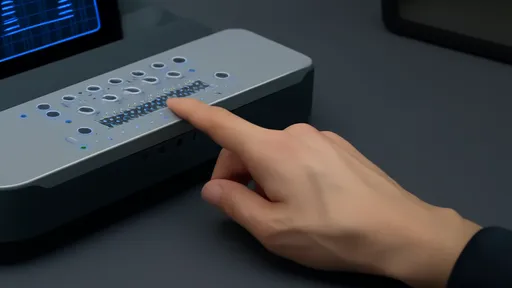
One of the most significant challenges in adapting braille displays for gaming is the limitation of current hardware. Most commercially available braille displays are linear, presenting only one line of text at a time. This poses obvious problems for gaming, where simultaneous multi-dimensional feedback is often necessary. Some experimental models are exploring grid-based tactile displays that can convey more complex spatial information, but these are still in early stages of development.
The gaming industry's response to this challenge has been surprisingly enthusiastic. Several indie developers have begun creating games specifically designed for braille tactile displays, while larger studios are exploring ways to incorporate tactile feedback into mainstream titles. These efforts range from simple text-based adventures to more complex strategy games that use varying vibration patterns to represent different units or terrain types.
Educational institutions have become unexpected pioneers in this field. Universities specializing in assistive technology have partnered with game developers to create prototypes that demonstrate the potential of tactile gaming. These collaborations have produced remarkable results, including games that teach braille literacy through interactive storytelling and puzzle-solving mechanics that rely entirely on touch-based cues.
Beyond entertainment, the implications of braille gaming technology extend into therapeutic applications. Occupational therapists report promising results using tactile games to help both children and adults with visual impairments develop spatial reasoning and problem-solving skills. The gamification of these therapeutic exercises has shown to increase engagement and motivation compared to traditional methods.
The social aspect of gaming hasn't been overlooked in these developments. Multiplayer games adapted for braille displays are being tested, allowing visually impaired players to compete or cooperate with sighted players through different but equivalent interfaces. This represents a significant step toward true inclusivity in gaming communities, where players of all abilities can share experiences on more equal footing.
Technical hurdles remain substantial. Current braille displays refresh slowly compared to visual displays, limiting the pace at which games can deliver information. Battery life is another concern, as the mechanical nature of braille pins consumes significant power. Researchers are exploring alternative actuation methods, including electroactive polymers and pneumatic systems, that might offer faster response times with lower energy requirements.
Consumer adoption presents another challenge. High costs have kept braille displays out of reach for many potential users, and the gaming-specific models are even more expensive due to their specialized nature. Advocacy groups are pushing for insurance coverage and educational funding to make these devices more accessible, arguing that their benefits extend far beyond entertainment into education and career development.
Looking ahead, the convergence of braille tactile displays with other emerging technologies could revolutionize accessible gaming. Haptic feedback systems, artificial intelligence that can dynamically adapt game complexity, and even potential connections to visual prosthetics all suggest a future where the line between sighted and non-sighted gaming experiences becomes increasingly blurred.
The development of braille tactile display gaming is more than just a niche innovation—it represents an important step toward universal design in technology. As these systems improve and become more widespread, they may influence game design as a whole, encouraging developers to think more critically about multi-sensory experiences that can benefit all players, regardless of their abilities.
While significant progress has been made, the field is still in its infancy. The coming years will likely see rapid advancements as more developers, researchers, and users contribute to this growing ecosystem. What began as an accessibility solution may well give rise to entirely new genres of games that redefine our understanding of interactive entertainment.

By /Jul 22, 2025

By /Jul 21, 2025
By /Jul 21, 2025
By /Jul 21, 2025

By /Jul 21, 2025

By /Jul 21, 2025

By /Jul 21, 2025
By /Jul 21, 2025

By /Jul 21, 2025
By /Jul 21, 2025

By /Jul 21, 2025

By /Jul 21, 2025

By /Jul 21, 2025

By /Jul 21, 2025

By /Jul 21, 2025

By /Jul 21, 2025

By /Jul 21, 2025

By /Jul 21, 2025
